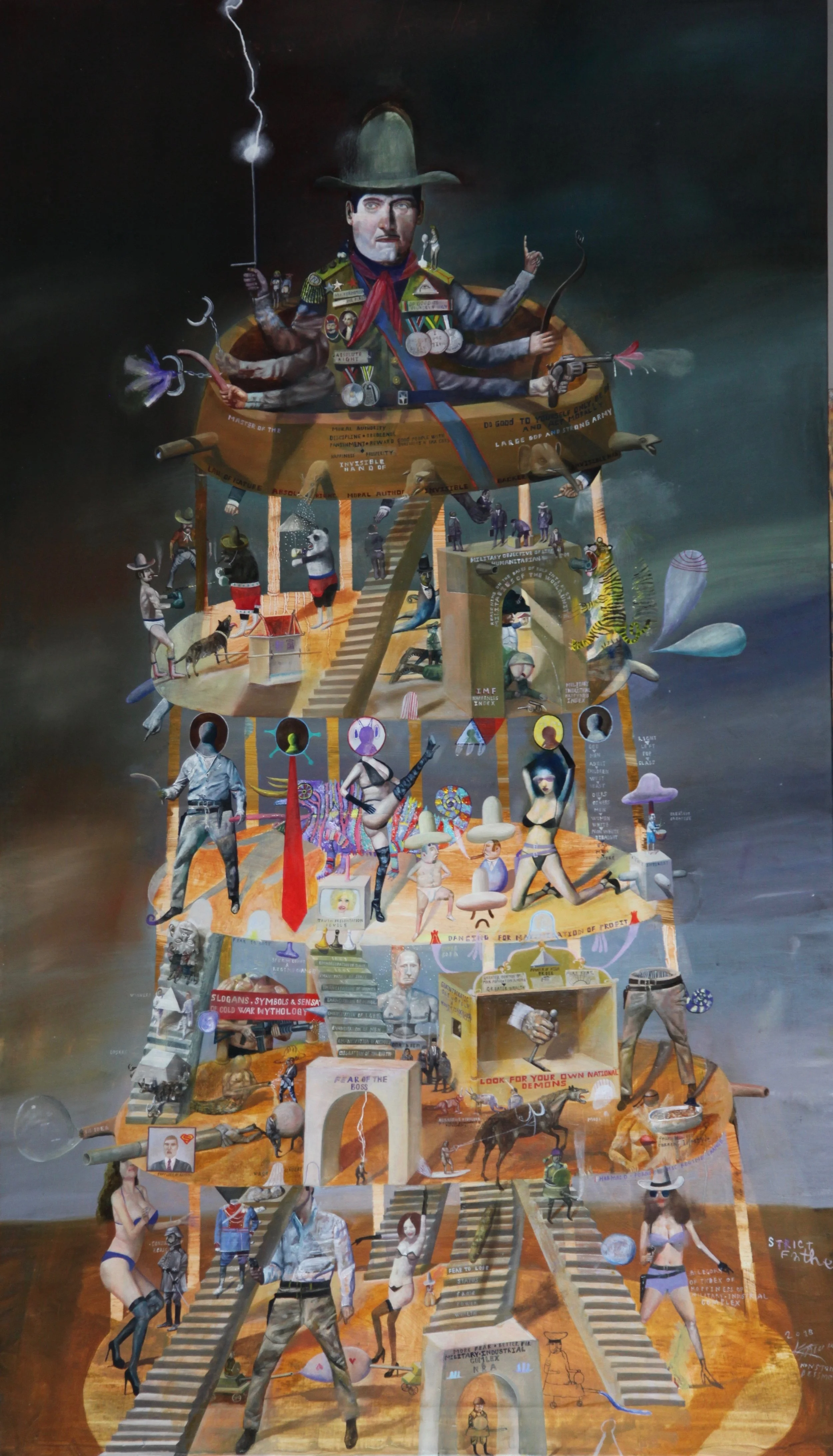
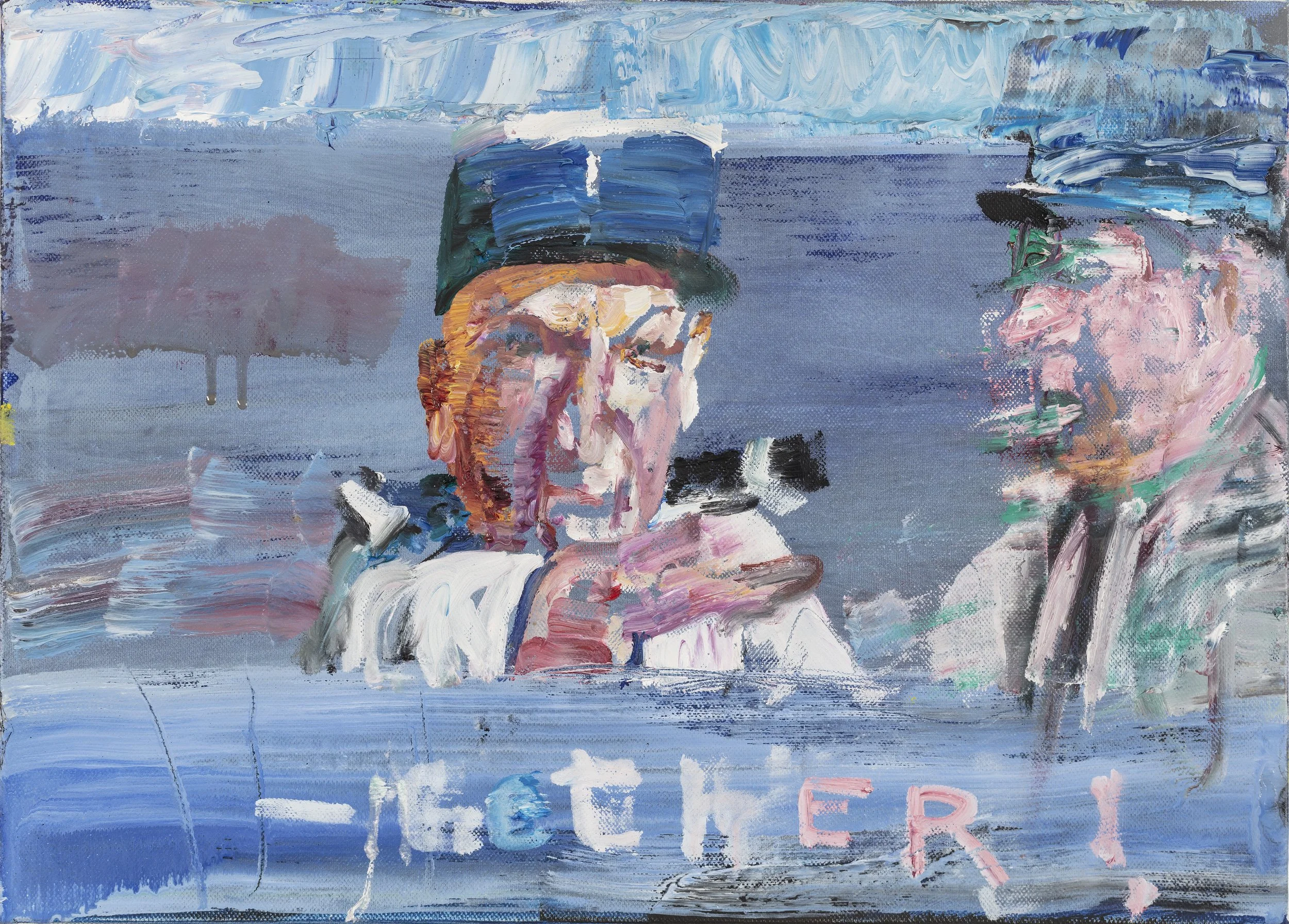
Konstantin works in extended series rather than single, isolated pieces — returning to a theme across multiple works to explore themes from different angles, over time. Each collection below represents a distinct body of work, its own line of inquiry.
In his Remake series (est. 2002), Konstantin recontextualizes iconic film stills, pairing them with original, offbeat text to inject a surreal sense of reality into cinema.
Inspired by the bizarre translation errors of China’s early-2000s bootleg DVD industry, the series juxtaposes movie frames with deliberately wrong subtitles. Through these mismatched pairings, Bessmertny opens up an absurd alternate dimension within familiar scenes.
In his East Meets West series, Konstantin explores the absurdities of cultural perception, satirizing how "the East" and "the West" view one another. By placing clashing icons into incongruous settings, Bessmertny exposes the humorous, exaggerated, and often bizarre stereotypes born from mutual exoticism.
Centered around the iconic Cantonese meal (飲茶), the Yam Cha series spotlights the funny, absurd moments born from centuries-old dining traditions. From the silent battle over who pays the bill to age-old superstitions, Konstantin exaggerates the theater of the table to reveal the human truths inside cultural customs.
The series is deeply rooted in Bessmertny’s years spent living in Hong Kong and Macau. Gathering regularly in the local tea houses that dot every corner of both cities, he transformed his first-hand observations of daily neighborhood life into sharp, affectionate social satire.
In his Nanbanjin series, Konstantin explores Macau’s underrepresented legacy as a pivotal crossroad between East and West. Blending rigorous historical research with satirical anecdotes, he traces the arrival of foreign "black ships" and the origins of Macau’s transformation into the gaming capital of Asia.
To bring these narratives to life, Bessmertny employs traditional East Asian techniques, painting on washi paper embellished with gold leaf. One highlight of the series—painted on an authentic gold-leaf screen discovered in a rural Japanese village—depicts vagabonds journeying between worlds, embodying the resilience, courage, and chaos of cultural convergence.
Against the stark, desolate expanse of Macau’s reclaimed land, four artists - Chao Chi Chun (鄒志全), Chan Hin Lo (陳顯耀), Konstantin Bessmertny (君士坦丁) & Ung Vai Meng (吳衛鳴) - gather to perform a collaborative calligraphic intervention. Captured in a moody, high-contrast black-&-white short film, the four physically trace & render the classical four-character idiom 海不揚波 (Hǎi Bù Yáng Bō — "The sea raises no waves").
In this performance, the ancient prayer for peaceful waters is stripped of its romantic origins and thrust into Macau's hyper-modern reality.
Katange combines the technique of opening a champagne bottle with the Japanese word Samurai blade, tapping into the obsession of Japonisme, thus blending decadence with precision.
Located in the luminous enclosure of the Eastern Himalayas, the state of Sikkim is a realm sculpted by the Limbu words su (ᤙᤢᤰ) "new" and khyim (ᤂᤡᤶ) "palace".
Exploring the private halls of European aristocracy, the In Rooms series contrasts majestic palace architecture with surreal, irreverent human behavior. Through these intimate domestic scenes, Konstantin satirizes power, luxury, and the quiet chaos behind heavy velvet curtains.
Rooted in history and political satire, the Anecdotes series paints the absurdities of absolute power. Inspired by the history of political humor under totalitarian regimes, Konstantin brings to life real and imagined stories featuring world leaders—from Churchill and FDR to Stalin. Through rich visual storytelling, Bessmertny highlights how humour can be used to make a point whilst amusing people.